
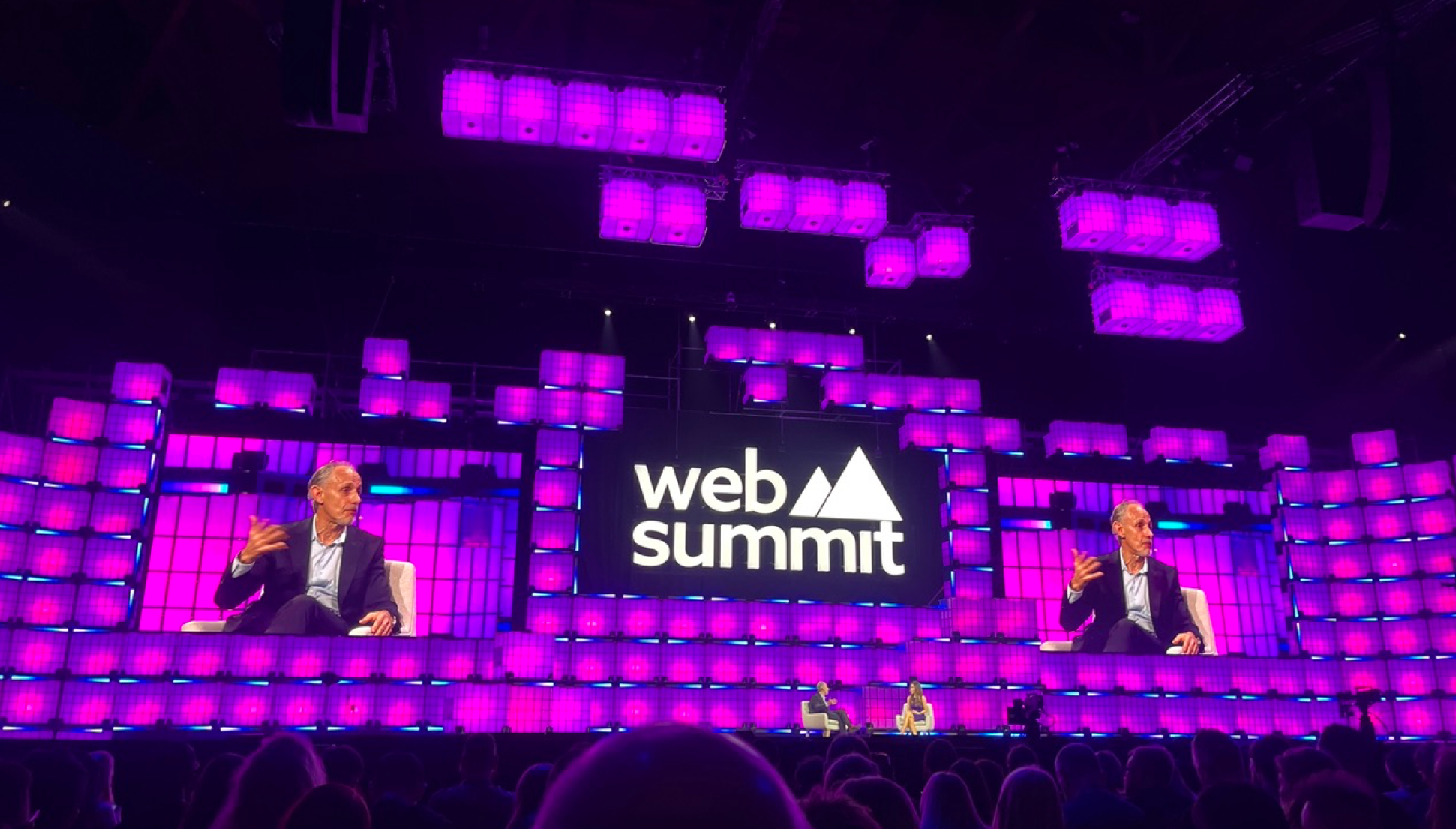
What We've Been Up To
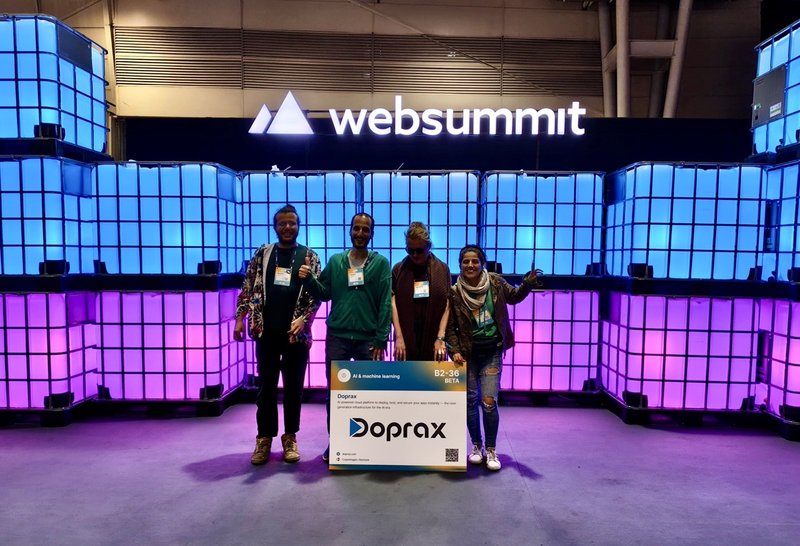
Web Summit is a big event, so there is a lot to do. Every single day was filled with impressions, be it from talks on the Main Stage, meetups, individual conversations at our booth, or just encounters at the coffee machine queue.
It is said that if you visit the Web Summit, you will inevitably miss out on certain things, because too many things are happening all at once. We found that to be true, and yet, we’ve met a great amount of people some of whom might have slightly changed (or much rather: enhanced) our trajectory.
Web Summit Then and Now
Web Summit used to be much smaller. When Paddy Cosgrave founded it in 2009, it was a gathering for a few hundred tech people in Dublin. The mission was the same as it is now: to connect founders, investors and curious people.
This year the event had over 70K visitors from 157 countries. We’ve met people from Canada, France, UK, Netherlands, the US, Singapore, and other countries. What these people had in common is their focus on innovation and the future.
Some were there to pitch their business idea, others to find ideas to support. In addition to that, Web Summit commonly also hosts industry leaders and sometimes celebrities (this time it was Joseph Gordon-Levitt talking about generative AI, copyright, and owning your digital self).
To quote our CEO, Hemen Showkati:
“Web Summit was a reminder of how many people are out there actually shaping the future, from small startups with raw ideas to leaders of companies like Cloudflare. Seeing that full spectrum was inspiring. And it reinforced something for me: teams like ours have a real chance to change the world for the better, if we execute well.”
What Industry Leaders Are Saying
Among the well-known attendees of the Web Summit this time there were:
Matthew Prince (CEO at Cloudflare), Tao Zhang (Co-founder and CPO at Manus AI), Jessica Sibley (CEO at TIME ), Keily Blair (CEO at OnlyFans), as well as representatives from Meta, Visa, Qualcomm, Microsoft, Bluesky, and others.
Here are some notable quotes from their talks we found interesting:
Matthew Prince (Cloudflare) was talking about agentic AI driving web traffic:
“In the future the business model of the internet is gonna change, that is the most interesting question in the world today, and if you’re not thinking about it for your business, then you’re not thinking about the most interesting question.”
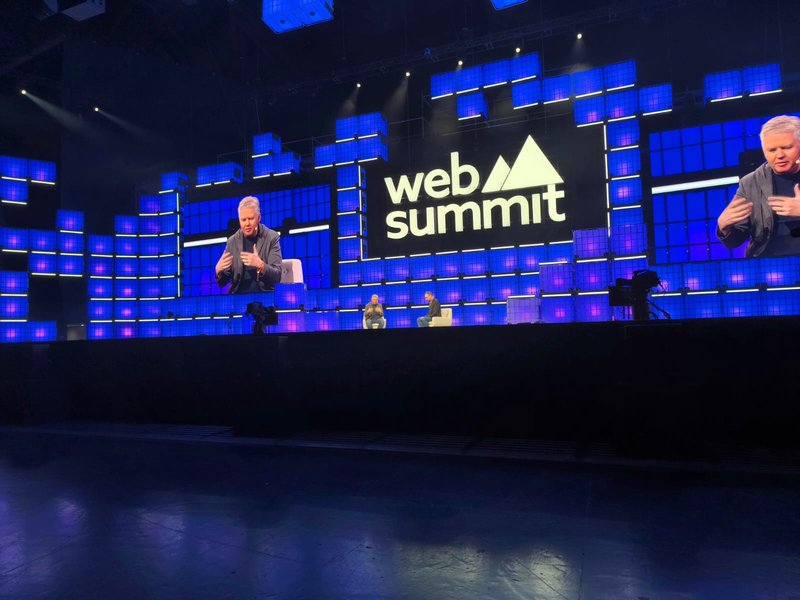
“This is another platform shift. We’ve lived through 3 platform shifts in the internet history. We went from the web through a browser, to social, and then to mobile, but the business model stayed the same with all of those. The think to think about now […] now you’ve got this new interface, the AI interface […], it is going to disintermediate the direct relationship with readers, but also with customers. In a world where all commerce is agentic, what happens to small businesses?”
Nigel Morris (Co-Founder at QED Investors):
“The money is chasing AI and stablecoin. So you might be in a business that is a massively disrupting business, a business that’s doing incredibly well, […] but if you’re not considered to be AI, then it’s much harder to raise."
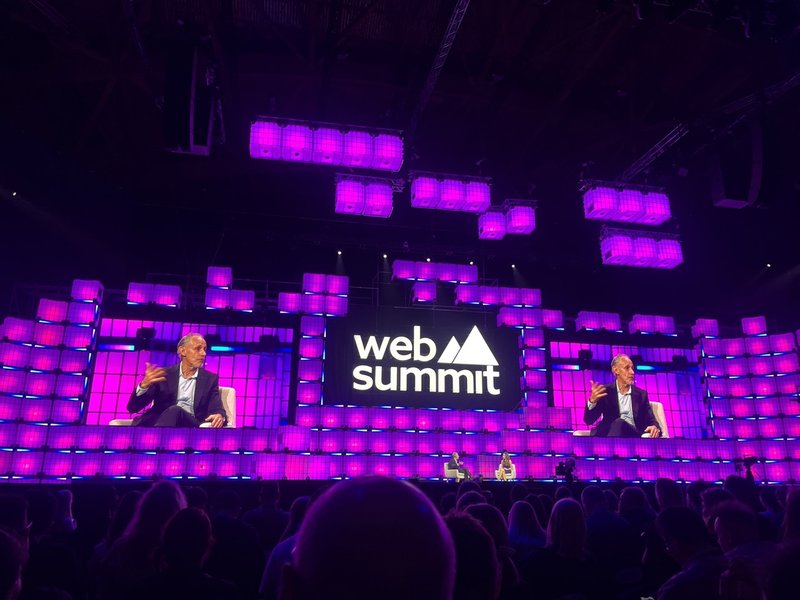
"Now what we’re seeing though is that every one of our portfolio companies, and I would posit everyone in the audience is leveraging AI in some palpable way. So the challenge is to weave AI into the storyline so that you can actually be able to raise.”
Anu Bharadwaj (President at Atlassian):
“We recently ran an AI collab survey across our customers to see how they’re progressing from pilot to production and it was startling to see how about 4% of enterprise customers said that they’re really getting transformative ROI from their AI deployments and when we dug into why the enterprises across the world are not getting the value they expect from pilots, it came down to three things. One was really that AI is often deployed in silos instead of end to end teamwork."
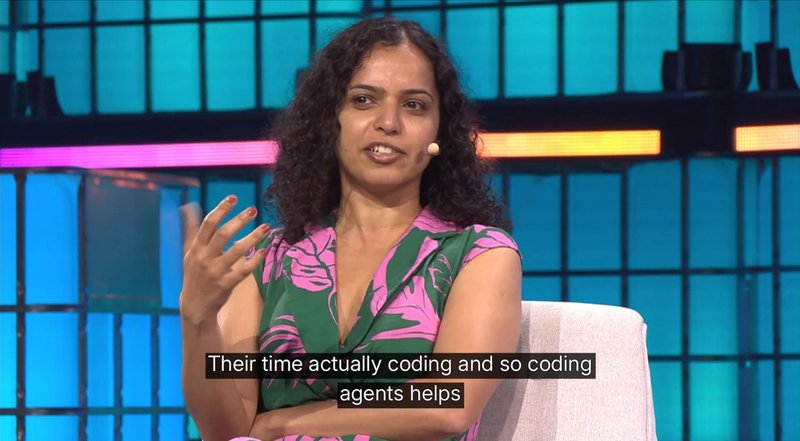
"So what happens when you throw AI at dysfunctional teams, it just automates the dysfunction. So really you want to think about end to end workflows. A common example is developers spend about 15% to 20% of their time actually coding and so coding agents help with that particular slice, but they spend the vast majority of their time working with other folkw on the team, like designers, customer support engineers, to really figure out how you build something of value and deploy it to production. And putting AI in use across that entire end to end workflow is what matters.”
Our Takeaways
So what does it all mean for us at Doprax? First of all, we see an increased need for infrastructure (which is what we happen to offer). Second of all, companies are realizing that AI only works when the underlying workflows and systems are solid. Without that, it just scales the chaos.
But let's look at it in more detail:
First: infrastructure demand is exploding. Everyone wants AI, but almost no one is prepared to run it. Even the biggest companies admitted that their deployments are fragmented, experimental, or stuck in pilot mode. When only 4% of enterprises report achieving real ROI from AI, it’s not because the models are bad, but because the operational layer is missing. That’s the gap.
Second: teams are overwhelmed. Atlassian’s point about “automating dysfunction” is real. If workflows are chaotic, AI doesn’t fix that. It accelerates the mess. The companies that succeed will be the ones that can instrument, monitor, and coordinate their systems end-to-end. That’s where the next generation of platforms (ours included) will matter.
Third: the business model of the internet is shifting faster than people think. Matthew Prince’s warnings about an “agentic internet” hit a nerve. If AI agents become the primary interface, companies will need stable, scalable, secure backends that can withstand machine-to-machine traffic, not just human clicks. Most startups aren't ready for that future, but it's coming anyway.
Fourth: everyone is trying to attach themselves to the AI wave, even if they’re not AI companies. Nigel Morris wasn’t exaggerating: nobody wants to pitch a “non-AI startup” in 2025. This creates a weird pressure: founders feel they must add AI, yet many don’t have the infrastructure, data pipelines, or monitoring systems to actually do it. This mismatch is one of the biggest risks (and opportunities) in the ecosystem right now.
Fifth: developers don’t want to be DevOps engineers. In conversation after conversation, we heard variations of the same theme: “We’re building cool things, but deploying them is a pain.” People want to build, not babysit servers. The more AI accelerates creation, the more critical simple deployment tools will become.
And finally: AI will soon operate AI. Several talks hinted at it indirectly: log analysis, anomaly detection, self-correcting systems. This aligns with where we’re going next — bringing AI into the operational layer, not just the application layer. An infrastructure that watches itself, explains its own behavior, and surfaces the real issues in plain language will soon be standard.
For us at Doprax, Web Summit confirmed one thing:
we’re building in the right direction, at exactly the right moment.