
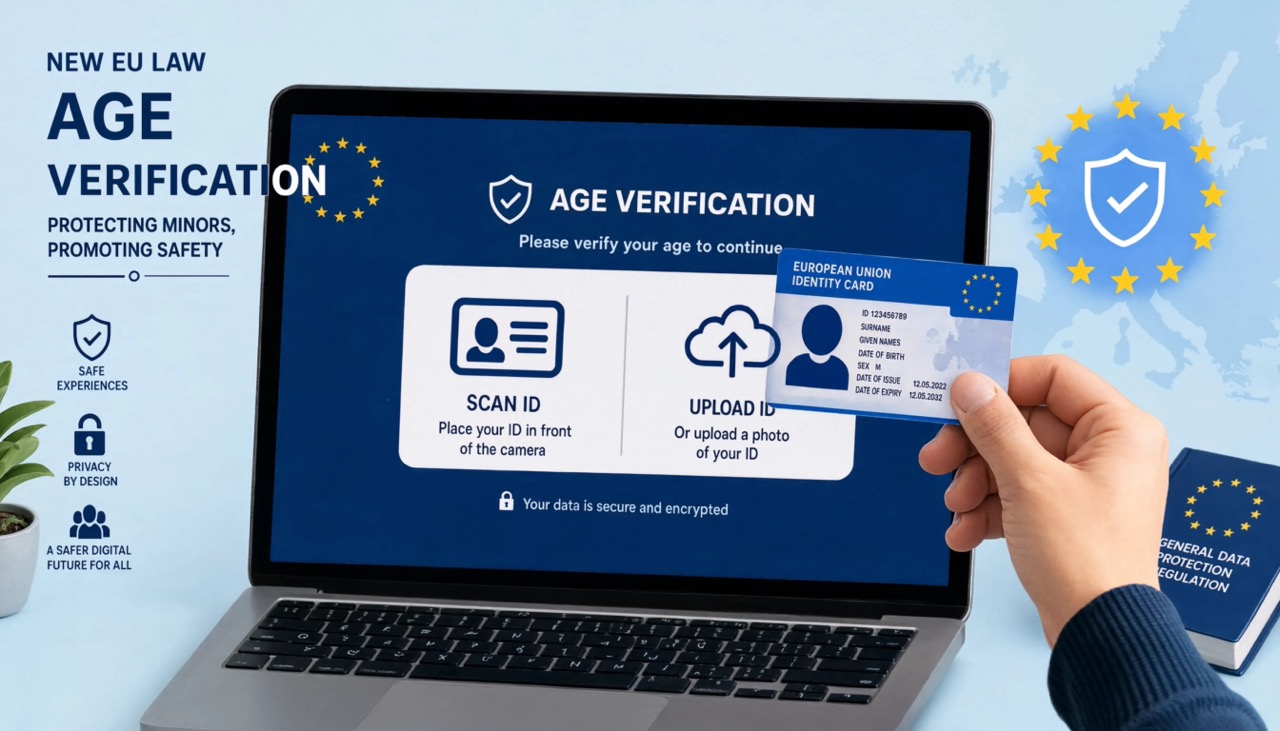
The official version sounds reasonable
The EU app uses zero-knowledge proofs. The platform gets a yes or no, not your name or date of birth. Transactions aren't linked across sites. The source code is open. On paper, it's a thoughtful implementation of a surveillance mechanism, which is still a surveillance mechanism.
H.R. 8250 is less careful. The bill is 6 pages long and delegates the hard questions, how to verify parents, how to secure the collected data, what apps can do with age data once they have it, to the FTC on a 180-day clock. The answers don't exist yet. The mandate does.
Both are framed around protecting children. Neither framework has a clean answer to what happens to the identity data of the adults who comply.
What this means for developers
If you build on platforms you don't control, you inherit their compliance posture. When a platform decides to implement age gating, your app gates too. When they scan IDs, your users' IDs are in someone else's database.
This isn't hypothetical. The EU's rollout targets France, Denmark, Greece, Italy, Spain, Cyprus, and Ireland by end of 2026. The Commission has made clear this is the first step in a broader digital identity framework. Age verification today, Digital Identity Wallets by 2027.
The developers most exposed are the ones who built everything on managed platforms, where the infrastructure decisions belong to someone else.
What self-hosting actually changes
Running your own infrastructure doesn't exempt you from the law. If you operate a service that falls under the DSA or an equivalent national rule, you comply with it regardless of where your server lives.
What it changes is narrower but real: you control what you collect, where it goes, and who can access it. A self-hosted service on a ProVM in Germany doesn't share a data pipeline with 300 other tenants. You're not caught up in a platform-level compliance decision made without you. If a regulator demands something from your hosting provider, the surface area is your service, not every service that shares infrastructure with you.
For developers building privacy-sensitive tools, the distinction matters. For developers who just want to ship without their users being swept into someone else's identity system, it also matters.
The pattern is worth tracking
The EU app bypassed its own prototype security in under 2 minutes after launch. The patch came fast, and the Commission called the vulnerabilities prototype-stage issues. That's probably true. It's also true that the infrastructure for universal identity verification is being built now, and "voluntary" EU tools have a habit of becoming mandatory when the political pressure is high enough.
H.R. 8250 hasn't cleared committee and may not survive it. Similar bills are moving in California, Texas, New York, Colorado, Illinois, Louisiana, and Utah. The federal version may stall. The state versions won't all stall at once.
You don't have to believe this all ends badly to think it's worth running more of your own stack.
Deploy a ProVM in under a minute and own your infrastructure from the start.